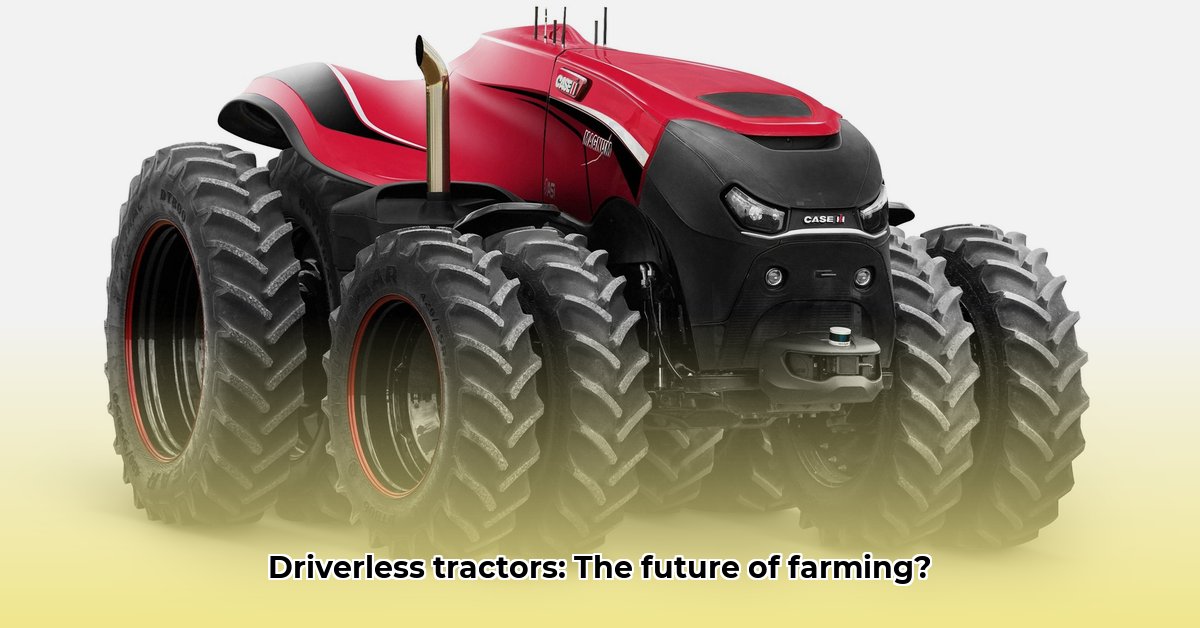
Imagine a farmer, comfortably seated in their farmhouse, overseeing multiple tractors autonomously tilling fields, planting seeds with pinpoint accuracy, and harvesting crops at optimal times – all without ever touching a steering wheel. This isn't science fiction; it's the reality of Case IH's driverless tractors, promising a revolution in agricultural efficiency and sustainability. Learn more about Case IH's innovations here. This article explores the technology behind these self-driving marvels, examines their potential benefits and challenges, and offers a path forward for farmers, manufacturers, and policymakers.
Case IH Driverless Tractors: A New Era in Agriculture
The familiar sounds of farm machinery are poised for a technological transformation. Case IH's autonomous tractors represent a paradigm shift, not just replacing human drivers but optimizing the entire farming process. This isn't merely about automation; it's about building a smarter, more sustainable, and ultimately more profitable agricultural system.
The Driving Forces Behind Autonomous Tractors: Addressing Modern Challenges
The adoption of driverless tractors is driven by several critical factors. First, the agricultural workforce is aging, and attracting younger generations to farming remains a considerable challenge. These machines offer a solution to labor shortages, ensuring consistent operation regardless of worker availability.
Second, precision farming is revolutionized. Autonomous tractors, equipped with advanced GPS systems and sensors, enable targeted planting, fertilization, and pesticide application. This minimizes waste, reduces environmental impact, and maximizes crop yields––a triple win for farmers, the environment, and consumers.
Beyond Self-Driving: The Technology at the Heart of Case IH's Innovation
Case IH's driverless tractors are far more than simply self-driving vehicles. They're sophisticated technological systems integrating GPS, sensor networks, and powerful onboard computers, all working in concert with farm management software. The tractors continuously analyze real-time field conditions, intelligently adapting to changing circumstances and avoiding obstacles with precision. This ensures efficient resource utilization and minimizes operational errors. Remote management capabilities allow farmers to monitor and control multiple machines simultaneously from a central location, maximizing efficiency and control.
Navigating the Future: Addressing the Challenges and Opportunities
While the potential benefits of autonomous tractors are immense, several challenges need to be addressed to ensure widespread adoption.
The Financial Landscape: Justifying the Investment
The substantial upfront cost is a major hurdle for many farmers. While long-term cost savings from reduced labor are anticipated, a thorough return on investment (ROI) analysis is crucial. Factors such as farm size, crop type, existing equipment, and financial risk tolerance heavily influence the decision-making process. Thorough cost-benefit analyses, including maintenance and potential downtime, are essential for informed decisions. Detailed ROI calculations, factoring in all aspects of operational costs and productivity gains, must be considered before adoption.
Prioritizing Safety: Mitigating Risks in Autonomous Operations
Safety is paramount. While technological advancements offer features like obstacle avoidance and emergency stops, potential disruptions like GPS failures, software glitches, or unexpected events within the field still need to be accounted for. Robust safety protocols and redundant systems are critical for widespread acceptance. Developing and implementing reliable backup systems and clearly defined emergency procedures are vital to mitigate potential risks.
Regulatory Frameworks and Infrastructure: Paving the Way for Widespread Adoption
The regulatory landscape surrounding autonomous farm equipment needs to evolve. Governments must establish clear guidelines and standards to ensure safe operation and address liability issues, as well as examine labor market implications. This includes addressing issues of insurance coverage for autonomous equipment. Furthermore, upgrading existing farm infrastructure, particularly improving internet connectivity in rural areas, is essential for seamless data transmission and remote control capabilities. This infrastructure upgrade, though costly, will unlock even greater long-term efficiency gains.
The Environmental Equation: Sustainable Farming Practices
Autonomous tractors hold the potential for meaningful environmental benefits. Precision farming techniques reduce chemical usage, minimizing pollution and resource depletion. However, a complete life-cycle assessment, considering the environmental impact of manufacturing, energy consumption, and eventual disposal, is crucial. While potential carbon footprint reductions are significant, a complete understanding of the entire environmental impact is vital.
A Collaborative Approach: Charting the Course for Autonomous Farming
The path to widespread adoption necessitates a collaborative effort. This involves a thoughtful consideration of the roles of various stakeholders in optimizing this technology's effectiveness and overall impact:
| Stakeholder | Short-Term Actions | Long-Term Actions |
|---|---|---|
| Farmers | Pilot programs, detailed ROI analysis, focus on labor savings | Infrastructure upgrades, integrating data analytics, precision agriculture integration |
| Manufacturers | Enhanced safety features, user-friendly interfaces, extensive testing | Standardized protocols, proactive regulatory compliance, advanced autonomy R&D |
| Governments/Regulators | Establishing clear regulations, supporting R&D initiatives | Safety certifications, liability frameworks, addressing workforce transition issues |
| Technology Providers | Promoting data interoperability, strong manufacturer partnerships | AI-powered systems, adapting path-planning algorithms, enhanced decision-making systems |
The Case IH driverless tractor marks a pivotal moment in agricultural history. By addressing the existing challenges and fostering collaboration among stakeholders, the agricultural sector can usher in an era of enhanced efficiency, sustainability, and profitability. The future of farming is not only about technology but also about the adoption of collaborative strategies that guarantee both ecological and economic sustainability.